Showing posts with label type. Show all posts
Showing posts with label type. Show all posts
Sunday, October 20, 2013
Type of pneumatic valve
Pneumatic Valve Types
Pneumatic valves have many types and functions. pneumatic valves .The role as a regulator / controller in the pneumatic system. Components such control or so-called valves (Valves). Pneumatic Valve types can be grouped according to the construction design as follows:
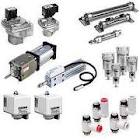
a. Poppet valves (Poppet Valve Pneumatic)
■ Ball Valve (Ball Valve Pneumatic Seat)■ Disc Valves (Pneumatic Valve Seat Disc)
b. Slide valve (slide valve Pneumatic)
■ Longitudinal Slide
■ Slide Plate
Meanwhile, according to its function valves are grouped as follows:
a) Valves Steering (Directional Control Valves)
b) One-way Valve (Non Return Valves)
c) Regulatory Pressure Valve (Pressure Control Valves)
d) Flow Control Valves (Flow Control Valves)
e) open-close valve (Shut-off valves)
While the arrangement order in the pneumatic system can be described as follows:
■ The input signal or input element gets energy directly from
power source (air felts) are then transmitted to the processor
signal.
■ The signal processor or processing element signal processing
logic inputs are to be forwarded to the fi nal control element.
■ end of the control signal (final control element) that will drive the direction of movement of the actuator output (working element) and this is the end result of the pneumatic system.
- Pneumatic-Valve Types

Tuesday, October 1, 2013
Type of UPS Uninterruptible Power Supply
UPS design of the model is divided into several types that produce different performance characteristics:
A. Standby
2. Line Interactive
3. Double Conversion On-Line
4. Delta Conversion On-Line
Standby UPS typesThis type is commonly used by home users for the Presidency with their PC. UPS to be able to do this type of filtration against power failures and flow management, in addition to design efficient, small size and inexpensive.
Line Interactive UPS types
 UPS is the type most often used in small business unit, web developer, and a number of servers located in government departments. Because, in addition to having high levels of reliability, this type also have the ability to adjust the voltage that is sufficient
fine.
UPS has an inverter is always connected to the output of the UPS system to convert the power from batteries into AC. In normal circumstances, the Inverter will perform battery charging. While in a state of power outages, Transfer Switch will close and drain power from the batteries to the UPS output. Position that is always connected to the inverter output filter provides additional power. This makes the type of UPS is widely used for server and electrical conditions are not too good.
Double Conversion type UPS On-Line
This type is most common for UPS with power more than 10kVA. These types have in common with the type of Standby. Only this type has a power source located on the inverter, not the AC power source. In this type, the main electricity supply interruption will not trigger a transfer switch for the incoming AC power to the central input to charge the batteries that provide power to the Inverter located at the output. Therefore, when the AC power is disconnected, the flow of energy will be transferred immediately without taking a break when the transfer occurs. This type of UPS above shows the performance of the average. Can be said of this type of approach the ideal of a UPS, unfortunately this type of heat is high enough.
UPS type Delta Conversion On-Line
Almost the same as the Double Conversion type, type Delta used to always supply voltage Inverter. When the power supply is interrupted, this type do the same with Double Conversion type. Delta Conversion has two functions, the first is to control the input power characteristics. While the second function is to control the input current to direct the process of charging the battery system. The thing to remember is to minimize this type of energy is wasted. In addition, it has a high compatibility to various types of generators and reduce the need for the use of cables.
Subscribe to:
Posts (Atom)