Showing posts with label charger. Show all posts
Showing posts with label charger. Show all posts
Tuesday, January 14, 2014
Universal Battery Charger Based on LM317
This universal battery charger is based on LM317 and has an adjustable regulated output voltage and also has an adjustable constant-current charging circuit that makes it suitable to use for charging most NiCad batteries and some other types of batteries . This LM317 universal battery charger can charge a single cell or a number of series-connected cells up to a maximum voltage of 18 V.
This universal battery charger circuit use just some common electronic components like LM317 regulator , operational amplifier and some 2n3055 power transistors .2n3055 power transistors Q1 and Q2 are connected as series regulators to control the battery chargers out¬put voltage and charge-current rate. The LM317 used as an adjustable voltage regulator supplies the drive signal to the bases of power transistors Q1 and Q2.

By turning the potentiometer R9 the output-voltage level will be modified. A current-sampling resistor, R8 (a 0.1-fi, 5-W unit), connected between the negative output lead and circuit ground.As the charging voltage across the battery begins to drop, the current through R8 decreases , then the voltage feeding pin 5 of U3 decreases, and the comparator output follows, turning Q3 back off, which completes the signals circular path to regulate the batterys charging current. The charging current can be set by adjusting R10 for the desired current.
This universal battery charger circuit use just some common electronic components like LM317 regulator , operational amplifier and some 2n3055 power transistors .2n3055 power transistors Q1 and Q2 are connected as series regulators to control the battery chargers out¬put voltage and charge-current rate. The LM317 used as an adjustable voltage regulator supplies the drive signal to the bases of power transistors Q1 and Q2.
By turning the potentiometer R9 the output-voltage level will be modified. A current-sampling resistor, R8 (a 0.1-fi, 5-W unit), connected between the negative output lead and circuit ground.As the charging voltage across the battery begins to drop, the current through R8 decreases , then the voltage feeding pin 5 of U3 decreases, and the comparator output follows, turning Q3 back off, which completes the signals circular path to regulate the batterys charging current. The charging current can be set by adjusting R10 for the desired current.

Friday, December 27, 2013
Car Mobile Phone Charger Circuit
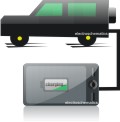
Cellphone battery charging process when were done traveling is a big problem. Because when traveling source of power supply is generally difficult to find. If you turn on your phone then the battery continuously over time will run out within a period of five to six hours and eventually mobile phones unusable. Here is described a series of simple charger that will increase battery life two to three hours.
In principle, the charger uses a series of Limited Voltage Current Source. Generally requires cellphone battery voltage 3.6 - 6 volts DC and currents 180-200 mA to perform the charging process. Cellphone battery usually consists of three NiCd battery cells, and each cell has a voltage of 1.2 volts potential. At the speed - average low flows required to charge mobile phone battery about - about 100mA.

In this series there is a 12V voltage source consists of 8 regular battery cells (each cell 1.5 Volt) able to supply current at 1.8 A which is connected with output terminals.
The circuit is also able to monitor the battery voltage level which is in charge. And will automatically cut off the charging process when the output terminal detects a certain battery voltage level predetermined. Timer IC NE555 is used to charge and monitor the voltage level in the battery, Pin 5 (IC1) as the control voltage using a reference voltage zener voltage 5.6Volt. Voltage at Pin 6 as the threshold set by VR1 and the voltage at Pin 2 as the trigger is set by VR2.
When the cellphone battery is connected in series (the Charging Process) applied voltage on PIN2 (IC1) as a trigger would be below the value 1 / 3 Vcc and will cause the Flip-Flop in IC1 will ON and on Pin 3 (IC1) will be high (Cause transistor T1 saturation.). When the battery is full (Full Charge) then the voltage will rise and the voltage on the PIN2 (IC1) will be above the level of trigger point threshold. This will cause the Flip Flop OFF and the output will be low (transistor T1 causes the cutoff) and indirectly also the charging process will stop.
Pin 6 (Threshold IC1) is set at 2 / 3 Vcc by using VR1, transistors T1 which is used to increase the charging current. R3 value is very important to provide the charging current, by setting the value of R3 to 39 ohms then the charging current supplied approximately 180mA. This circuit can be built on any type of PCB (General Purpose PCB) for the calibration process using the DC voltage level cutoff Variable Power Supply. Connect the output terminal circuit with Variable DC Power Supply and set on 7 volts. Adjust VR1 in middle position and slowly adjust VR2 until LED1 OFF, this indicates Low Output. LED1 should turn on when the DC Variable Power Supply voltage is reduced below 5V. LED1 Status flame shown in the table below. Closed circuit with plastic casing and use a suitable connector for connecting to the Battery for Mobile.
Sunday, December 22, 2013
12 Volt Nicad Battery charger
See this charger schematic below :

Wednesday, December 18, 2013
12V 4 AA Cell Differential Temperature Charger
This project includes a number of improvements over my older Temperature Controlled NICD Charger circuit. This circuit runs on 12VDC, allowing it to be used in a car or from a 12V solar power system. Additionally, a current sensor LED verifies that the cells are receiving charging current. Note that the current sensor circuitry is not shown in the circuit board photo above, it was added to the side of the main board via a small perfboard.
12V, 4-AA Cell Differential Temperature Charger Circuit diagram
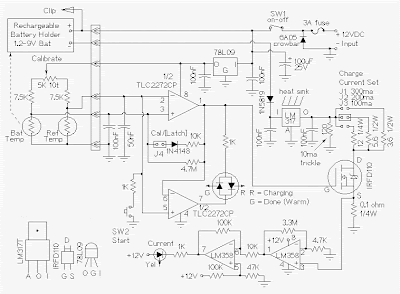
The current is adjustable in three steps from 100 to 300mA, allowing fast charging of AA, AAA or other small cells. Battery packs from 1 to 6 cells can be charged with this circuit. NiMH and older NiCD cells are supported. The circuit is protected from reverse input voltage and reversed cells.
Connections:
12VDC power is supplied to the circuit from an external source such as a car battery system, a 12V solar power system or a regulated "wall wart" supply. If DC power is applied backwards, the 6A05 crowbar diode causes the 3A fuse to blow, protecting the circuit from reverse voltage. The power switch routes power to the 78L09 voltage regulator and the battery. The 78L09 regulator provides regulated power to the rest of the circuit.
The battery current loop starts with the +12V supply, then runs through the battery and through a 1N5819 reverse voltage protection diode. Current continues through the LM317 1 amp adjustable voltage regulator which is wired as a constant current source, through the IRFD110 power MOSFET transistor, which switches charging current on and off, through the 0.1 ohm current sensing resistor to ground (12VDC negative). The charge current is selected by jumpering one of three current-set resistors on the negative side of the LM317 regulator. The 120 ohm trickle charge resistor always allows 10mA of current to flow through the battery.
The temperature control part of the circuit starts with a matched pair of 10K NTC thermistors. One thermistor is epoxied to a small metal reference temperature plate. The other thermistor is epoxied to a metal battery holder. The temperature sensors are balanced by the calibrate potentiometer. The 100nF and 50nF capacitors across the thermistors cause different start-up time delays to insure that the following circuitry powers up in the off state.
The upper half of the TLC2272CP rail-to-rail op-amp is wired as a latching comparator when the Cal/Latch jumper is present (operate mode), the circuit becomes a regular comparator with hysteresis when the jumper is off (calibrate mode). Assuming the battery is cold and the circuit is in operate mode, the start switch turns the op-amp on for a charging cycle. When the battery temperature exceeds the reference temperature, the op-amp turns off and the diode in the feedback loop latches the op-amp off. The op-amp output also drives the IRFD110 current switch MOSFET.
The lower half of the TLC2272CP simply inverts the output from the upper part of the op-amp, this gives a bipolar drive signal for running the Red/Green Charging/Done light.
An optional current flow lamp was added to the circuit. Rechargeable batteries tend to get corroded contacts which can prevent the charging current from flowing. The lamp provides an indication that the charging current is really making its way through the batteries. The current Flow lamp circuit consists of an LM358 op-amp wired as a current measurement amplifier that monitors the voltage drop across a 0.1 ohm resistor. The LM358 is specially suited for this type of circuit. The output of the first LM358 stage is further boosted and offset by the second LM358 stage. This produces a digital signal that drives the indicator LED through a current limiting resistor. If you dont want to add the Current Flow circuit, replace the 0.1 ohm resistor with a wire jumper.
Construction:
The circuit was built on a custom home-built circuit board, a hand-wired perf board would also make a good platform for this project. The LM317 regulator is mounted on an aluminum heat sink under the main board, the heat sink should be kept away from the two temperature sensors. The reference temperature sensor is mounted to a small piece of aluminum that is thermally isolated from the battery holder and the rest of the circuitry. All of the sub-components are mounted on a piece of plexiglass or another non conducting material.
Calibration:
Put the circuit in one location and allow the temperature to stabilize for an hour or so. Remove the Cal/[Latch] jumper. Adjust the 20 turn Calibrate trimmer a little bit past the point where the Charge/Done light turns red. Put the Cal/[Latch] jumper back.
Use:
The charger should only be used in a cool location with a fairly constant temperature. Install the batteries to charge in the battery holder, start with the negative side of the socket and connect the alligator clip to the + side of the last cell. Put a piece of insulating foam over the battery holder to keep the warmth in the battery. If the battery is already hot, allow it to cool down before starting the charge cycle. The Charging/Done light should now be green.
Push the Start switch and the Charging/Done light should turn red. The Current Flow light should turn on, if it doesnt, try reseating the cells in the holder. After some amount of charging, the battery will warm up, the Charging/Done light will turn green and the battery charge cycle be finished. If you want to equalize the weaker cells in the battery, allow the pack to cool down then run another charging cycle, the second time should not take very long.
12V, 4-AA Cell Differential Temperature Charger Circuit diagram
The current is adjustable in three steps from 100 to 300mA, allowing fast charging of AA, AAA or other small cells. Battery packs from 1 to 6 cells can be charged with this circuit. NiMH and older NiCD cells are supported. The circuit is protected from reverse input voltage and reversed cells.
Connections:
- 12VDC (nominal) power input
- Connections for the Battery Under Charge
- Power On/Off switch
- Charge Start switch
- 3 step Charge Current Select jumper
- Calibrate/[Latch] mode jumper
- Temperature sensor calibrate trimmer
- Red/Green Charging/Done light
- Amber Current Flow light
12VDC power is supplied to the circuit from an external source such as a car battery system, a 12V solar power system or a regulated "wall wart" supply. If DC power is applied backwards, the 6A05 crowbar diode causes the 3A fuse to blow, protecting the circuit from reverse voltage. The power switch routes power to the 78L09 voltage regulator and the battery. The 78L09 regulator provides regulated power to the rest of the circuit.
The battery current loop starts with the +12V supply, then runs through the battery and through a 1N5819 reverse voltage protection diode. Current continues through the LM317 1 amp adjustable voltage regulator which is wired as a constant current source, through the IRFD110 power MOSFET transistor, which switches charging current on and off, through the 0.1 ohm current sensing resistor to ground (12VDC negative). The charge current is selected by jumpering one of three current-set resistors on the negative side of the LM317 regulator. The 120 ohm trickle charge resistor always allows 10mA of current to flow through the battery.
The temperature control part of the circuit starts with a matched pair of 10K NTC thermistors. One thermistor is epoxied to a small metal reference temperature plate. The other thermistor is epoxied to a metal battery holder. The temperature sensors are balanced by the calibrate potentiometer. The 100nF and 50nF capacitors across the thermistors cause different start-up time delays to insure that the following circuitry powers up in the off state.
The upper half of the TLC2272CP rail-to-rail op-amp is wired as a latching comparator when the Cal/Latch jumper is present (operate mode), the circuit becomes a regular comparator with hysteresis when the jumper is off (calibrate mode). Assuming the battery is cold and the circuit is in operate mode, the start switch turns the op-amp on for a charging cycle. When the battery temperature exceeds the reference temperature, the op-amp turns off and the diode in the feedback loop latches the op-amp off. The op-amp output also drives the IRFD110 current switch MOSFET.
The lower half of the TLC2272CP simply inverts the output from the upper part of the op-amp, this gives a bipolar drive signal for running the Red/Green Charging/Done light.
An optional current flow lamp was added to the circuit. Rechargeable batteries tend to get corroded contacts which can prevent the charging current from flowing. The lamp provides an indication that the charging current is really making its way through the batteries. The current Flow lamp circuit consists of an LM358 op-amp wired as a current measurement amplifier that monitors the voltage drop across a 0.1 ohm resistor. The LM358 is specially suited for this type of circuit. The output of the first LM358 stage is further boosted and offset by the second LM358 stage. This produces a digital signal that drives the indicator LED through a current limiting resistor. If you dont want to add the Current Flow circuit, replace the 0.1 ohm resistor with a wire jumper.
Construction:
The circuit was built on a custom home-built circuit board, a hand-wired perf board would also make a good platform for this project. The LM317 regulator is mounted on an aluminum heat sink under the main board, the heat sink should be kept away from the two temperature sensors. The reference temperature sensor is mounted to a small piece of aluminum that is thermally isolated from the battery holder and the rest of the circuitry. All of the sub-components are mounted on a piece of plexiglass or another non conducting material.
Calibration:
Put the circuit in one location and allow the temperature to stabilize for an hour or so. Remove the Cal/[Latch] jumper. Adjust the 20 turn Calibrate trimmer a little bit past the point where the Charge/Done light turns red. Put the Cal/[Latch] jumper back.
Use:
The charger should only be used in a cool location with a fairly constant temperature. Install the batteries to charge in the battery holder, start with the negative side of the socket and connect the alligator clip to the + side of the last cell. Put a piece of insulating foam over the battery holder to keep the warmth in the battery. If the battery is already hot, allow it to cool down before starting the charge cycle. The Charging/Done light should now be green.
Push the Start switch and the Charging/Done light should turn red. The Current Flow light should turn on, if it doesnt, try reseating the cells in the holder. After some amount of charging, the battery will warm up, the Charging/Done light will turn green and the battery charge cycle be finished. If you want to equalize the weaker cells in the battery, allow the pack to cool down then run another charging cycle, the second time should not take very long.
Tuesday, December 17, 2013
12 Volt Battery charger and also can Accu Charger
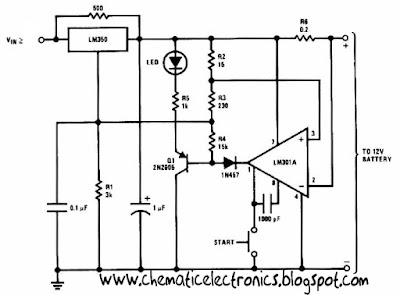
This 12 Volt Battery charger circuit best performance to charger 12 volt battery . Why this charger is best performance because this 12 Volt Battery charger quickly to recharger battery and shuts off at full charge. Initially , charging current is limited 2 A , but you can change for the transistor. As the battery voltage rises , current to the battery decreases , and when the current has decreases to 150 mA or 0.15 A this 12 Volt Battery charger switches to a lower float voltage , which prevents overcharge.
 |
| 12 Volt Battery charger Click to view Enlarge |
The 12 Volt Battery charger can be charger wet accu and dry accu , and to be make the accu old last longer. The output charger goes to 14.5 Volt. As the battery or accu approaches full charge , the charging current decreases and the output voltage is reduced from 14.5 Volt to about 12.5 volt, terminating the charging.
Sunday, December 15, 2013
Lead achid battery charger up to 3 battery
See battery charger circuit below :
 | |
| This is charger battery circuit |
Above circuit furnishes an initial voltage of 2.5 Volt per Cell at 25 degree celcius to rapidly charge a battery . the charging current decreases as the battery cahrges , and when the current drop 180 mA , the charging circuit reduces the output voltage to 2.35 V per cell, leaving the battery in a fully charged state.
Friday, November 15, 2013
Accu charger use a diac and triac
This circuit can be used to charge Accu and cells battery , the circuit can has a very stable output that would make the battery last longer and maximize the added battery capacity. When charge was also quite fast , so it can optimize the time.

A diac is used in the gate circuit to provide a threshold level for firing the triac . C3 and R4 provide a transient suppression network. R1 , R2 , R3 , C1 , and C2 provide a hase - shift network for the signal being applied to the gate. R1 is selected to limit the maximum charging current at full rotation of R2.
Monday, October 14, 2013
Charger circuit equipped with a regulator circuit output voltage
The circuit charger is equipped with voltage output settings , so that we can regulate how much voltage to charge the battery. And the settings using the potentio making it easier for us managing voltage up to a mV. See charger circuit below :

Adjust the circuit by setting the 500 Ohm resistor while it is attached to a fully charged battery.
You can use the circuit to charge :
- Cells battery
- Wet Accu
- Dry Accu
- Nicad battery
- Solar battery
Saturday, October 12, 2013
Battery Charger Using LTC4078
Using the LTC4078 standalone linear charger circuit you can design a very simple single-cell battery charger circuit for Li-Ion Li-Polymer battery . This LTC4078 battery charger circuit works from both wall adapter and USB inputs. This charger can detect power at the inputs and automatically select the appropriate power source for charging.
Battery Charger Using LTC4078 Circuit diagram

As you can see in the circuit diagram , this Li-Ion Li-Polymer charger requires few external components and you will need to apply just few equations ,to design a full work USB , wall adapter charger .
The charge current can be programmed up to 950mA from wall adapter input . IUSB pin is used for program the charge current for USB power that can be programmed by connecting a resistor to the ground.
The voltage on this pin can be used to measure the battery current delivered from the USB input using the following formula: IBAT = (VIUSB/RIUSB)*1000 . ITERM pin is the termination current threshold program that is set by connecting a resistor to ground. ITERMINATE is set by the following formula:
ITERMINATE =100V/RITERM ; RITERM =100V/ITERMINATE IDC pin is used for program the charge current for wall adapter power that is set by connecting a resistor to ground.The voltage on this pin can be used to measure the battery current delivered from the DC input using the following formula: IBAT = (VIDC/RIDC)*1000 .
The charge current delivered to the battery from the wall adapter or USB supply is programmed using a single resistor from the IDC or IUSB pin to ground and can be calculated using the following equations:
RIDC =1000V/ICHRG-DC , ICHRG-DC = 1000V/RIDC - Wall adapter
RIUSB =1000V/ICHRG-USB , ICHRG-USB =1000V/RIUSB – USB port.
Battery Charger Using LTC4078 Circuit diagram
As you can see in the circuit diagram , this Li-Ion Li-Polymer charger requires few external components and you will need to apply just few equations ,to design a full work USB , wall adapter charger .
The charge current can be programmed up to 950mA from wall adapter input . IUSB pin is used for program the charge current for USB power that can be programmed by connecting a resistor to the ground.
The voltage on this pin can be used to measure the battery current delivered from the USB input using the following formula: IBAT = (VIUSB/RIUSB)*1000 . ITERM pin is the termination current threshold program that is set by connecting a resistor to ground. ITERMINATE is set by the following formula:
ITERMINATE =100V/RITERM ; RITERM =100V/ITERMINATE IDC pin is used for program the charge current for wall adapter power that is set by connecting a resistor to ground.The voltage on this pin can be used to measure the battery current delivered from the DC input using the following formula: IBAT = (VIDC/RIDC)*1000 .
The charge current delivered to the battery from the wall adapter or USB supply is programmed using a single resistor from the IDC or IUSB pin to ground and can be calculated using the following equations:
RIDC =1000V/ICHRG-DC , ICHRG-DC = 1000V/RIDC - Wall adapter
RIUSB =1000V/ICHRG-USB , ICHRG-USB =1000V/RIUSB – USB port.
Monday, October 7, 2013
USB powered battery charger circuit

At this time I will share about the series used in the usb to charge battery. Issued voltage 4.7 Volt to 5 Volt DC suitable for battery charge the phone, as well as other batteries.
Below is a circuit where the voltage is removed the usb on the computer will be strengthened by several components so that the voltage used to charge batteries more powerful and filtered, and will make it more durable and long lasting.
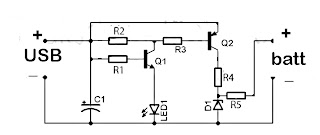
Part List :
R1 = 1 K
R2 = 330 R
R3 = 4K7
R4 = 300 R
R5 = 27R
D1 = 4.7 volt zener /1W
C1 = 100uF/16V
Q1 = BC548
Q2 = BC558A
R3 = 4K7
R4 = 300 R
R5 = 27R
D1 = 4.7 volt zener /1W
C1 = 100uF/16V
Q1 = BC548
Q2 = BC558A
Friday, October 4, 2013
Faster Battery Charger Circuit 6 12 Volt with IC LM308 and LM317
This circuit is quickly charging the battery . If you need a faster charger ,this circuit is recomended to you . And this charger is low temperature , the temperatur is 5 degree celcius. Input Voltage is 15 Volt DC , and Output voltage to charging 6 -12V and you can adjust by the D1 (see schematic). And adjust the D1 to 50 mV greater VZ than D2 (see schematic). Couple the D2 to battery. This circuit operating by IC LM308 and LM317 and any other components. And you can use this circuit to charging Accu 6 or 12 Volt , dry or wet and other battery .
See this Schematic Circuit below :

Thursday, October 3, 2013
Ultra Fast Battery charger circuit
Ultra Fast Battery Chager for Nickel-Cadmium battery cells [NiCad] which will be discussed in this article is Fast NiCad Battery Charger, called the Ultra Fast Charger Battery Charger NiCad because it can make filling fast NiCad Batteries Cell. A battery charger in Desai has a fast charging capabilities such as Ultra Fast Battery Chager for Nickel-Cadmium battery cells [NiCad] on this article shall be equipped with some ability to protect the battery and charger circuit itself.
Feature owned by Ultra Fast Battery Chager for Nickel-Cadmium battery cells [NiCad]
- Autoshut-off, is the ability of the charger to stop charging current to a NiCad battery if the capacity NiCad battery is fully charged.
- Polarity Protection, with the existence of this capability so if there are mounting the battery on the charger upside yan can be known.
- Constant output voltage
- Output currents enough to fill some NiCad batteries at once in parallel.
- Short Circuit Protection, with the existence of this protection circuit so if there is short-circuit caused by a battery and a charger circuit itself will not damage the other parts are not damaged.
- Series Ultra Fast Battery Chager for Nickel-Cadmium battery cells [NiCad]

Image series above is a series of schematic drawings for Ultra Fast Battery Chager for Nickel-Cadmium battery cells [NiCad]. Ultra Fast Battery Chager for Nickel-Cadmium battery cells [NiCad] can be used for 8 to 10 NiCad batteries at once with 12 volt output voltage and max current is 3.5 A. The main components in the circuit of Ultra Fast Battery Chager for Nickel-Cadmium battery cells [NiCad] is UC3843 and MC34181. UC3843 chip is a voltage regulator and M34181 is a JFET OpAmp with characteristic low offset voltage, input impedance is very high. MC34181 serves as a voltage comparator.
Thursday, September 26, 2013
Universal battery charger with 12V source voltage
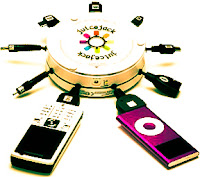
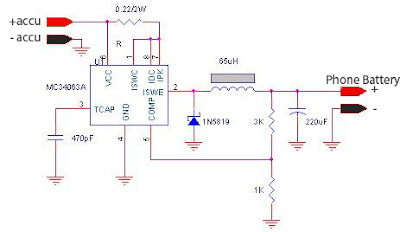
In this post I will share about using Accu source to charge batteries that can be used on any mobile brand, or can be called universal phone battery charger. Because the battery charger using a source of 12V, the charge accumulator can also be used in cars and others.
This will out charger circuit voltage of 5 volts DC, with input from at least 6 volt battery, and voltage inputs that have been tried till with 15 volts (more than it has not been tried, because the battery that tie the maximum output voltage is only 13.8 volts).
Tuesday, September 17, 2013
Solar Charger use IC LM317
At this point is a Solar Charger Circuit to is used to charge information Acid otherwise Ni-album batteries using the solar energy power. The circuit harvests solar energy to charge a 6 volt 4.5 Ah rechargeable battery in favor of various applications. The stallion has Voltage and Current supervision and terminated voltage restrict sour facilities.
Circuit uses a 12 volt solar panel and a changeable voltage supervisor IC LM 317. The solar panel consists of solar cells each one rated on 1.2 volts. 12 volt DC is presented from the panel to charge the battery. Charging current passes through D1 to the voltage watchdog IC LM 317. By adjusting its Adjust pin, output voltage and current can subsist regulated.
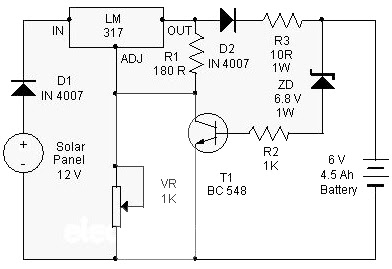 |
| Solar Charger use IC LM317 Schematic |
VR is placed amid the adjust pin and ground to provide an output voltage of 9 volts to the battery. Resistor R3 confine the charging current and diode D2 prevents discharge of current from the battery. Transistor T1 and Zener diode ZD conduct yourself having the status of a stop rotten switch at what time the battery is ample. Normally T1 is rancid and battery gets charging current.
After the terminal voltage of the battery rises over 6.8 volts, Zener conducts and provides station current to T1. It followed by turns on education the output of LM 317 to prevent charging. If you want to specific voltage / current output , you can replacing ZD on the circuit above.
Monday, September 16, 2013
12 V battery charger with PUT
A short-circuit proof battery charger will provide an average charging current of about 8A to a 12V lead-acid storage battery. The Charger circuit has an additional advantage, it will not function nor will it be damaged by improperly connecting the battery to the circuit. With 220V at the input , the circuit comences to function when the battery is properly attached.The battery provides the current to charge the timing capacitor C1 used in the PUT relaxation oscillator.When C1 charges to the peak point voltage the PUT , the PUT fires turning the SCR on , which in turn applies charging current to the battery. As the battery charges , the battery voltage increases slightly which increases the peak point voltage of the PUT. The voltage on C1 increases until the zener voltage of D1 is reached , which clamps the voltage on C1 , and thus prevents the PUT oscillator from oscillating and charging ceases. The maximum battery voltage is set by potentiometer R2 which sets the peak point firing voltage pf the PUT . In the circuit shown , the charging voltage can be set from 10 V to 14 V - the Lower limit being set by D1 and the upper limit by T1.
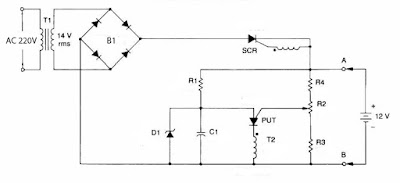
Part List :
Resistor
R1 = 10K
R2 = 50K trim
R3 = 47K
R4 = 1K
Capacitor
C1 = 0.1uF
Diode , SCR , PUT
B1 = MDA990-1
D1 = 1N5240 10V
SCR = 2N5164
PUT = MPU131
Transformer , Inductor
T1 = Stepdown 220V to 14V
T2 = 11Z12 1:1
Thursday, September 12, 2013
USB Charger For Lithium Ion battery
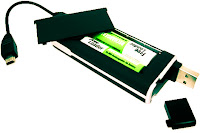
USB Battery Charger For Lithium Ion battery with the LM3622 is a series of lithium ion battery charger. This charger circuit operates using power from the USB source PC.
Current consumption of a series of USB Battery Charger For Lithium Ion battery with 400mA LM3622 is limited by R1, so it does not exceed the current maximum limit that can be given by a USB computer. Brains from USB Battery Charger For Lithium Ion battery with IC LM3622 , it is a national of having special technical specification charger for lithium ion batteries.
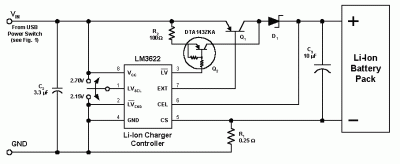
In a series of USB Battery Charger For Lithium Ion with LM3622 R1 0.25 Ohm value that serves to limit the charging current 400mA to the battery. Q2 and Q1 is the last part of the USB Battery Charger For Lithium Ion battery with the LM3622. In principle, USB Battery Charger For Lithium Ion with LM3622 identify the condition of the battery full charged battery voltage via pin 6 LM3622. USB Series Lithium Ion Battery Charger For LM3622 is equipped with a switch to select the battery that was in charge of 2.7 volts or 2.1 volts.
USB Charger For Lithium Ion battery
USB Battery Charger For Lithium Ion battery with the LM3622 is a series of lithium ion battery charger. This charger circuit operates using power from the USB source PC.
Current consumption of a series of USB Battery Charger For Lithium Ion battery with 400mA LM3622 is limited by R1, so it does not exceed the current maximum limit that can be given by a USB computer. Brains from USB Battery Charger For Lithium Ion battery with IC LM3622 , it is a national of having special technical specification charger for lithium ion batteries.
In a series of USB Battery Charger For Lithium Ion with LM3622 R1 0.25 Ohm value that serves to limit the charging current 400mA to the battery. Q2 and Q1 is the last part of the USB Battery Charger For Lithium Ion battery with the LM3622. In principle, USB Battery Charger For Lithium Ion with LM3622 identify the condition of the battery full charged battery voltage via pin 6 LM3622. USB Series Lithium Ion Battery Charger For LM3622 is equipped with a switch to select the battery that was in charge of 2.7 volts or 2.1 volts.
Subscribe to:
Posts (Atom)