Showing posts with label 12v. Show all posts
Showing posts with label 12v. Show all posts
Sunday, January 12, 2014
Inverter 12V to 115V with 25 W power output
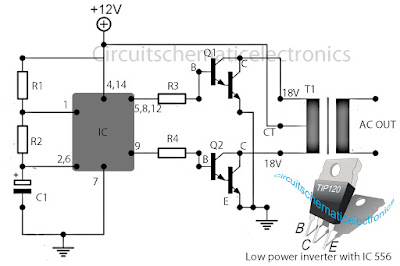
Low power inverter schematic are only use 9 components , one of which IC 556 , TIP120 NPN Darlington transistor.And turns 10 to 16 Vdc into 60 HZ, output 115 V square-wave power to operate ac equipment up to 25 W. In the circuit first ic originally hires as a timer chip m for stabilizatiom oscilator with components R1 and C1 setting frequency oscilator. Then the two transistor driver, drive the transformer push-pull fashion, When one transistor is biased on , the other circuit cut-off . The transformer is a 120V/18Vct unit that is connected backwards, so that it steps the voltage up rather than down. Oscilator circuit operates from about 4 to 16 V for stable output.
Part List :
R1 = 1K
R2 = 12K
R3 = 1K
R4 = 1/4W
C1 = 1uF
IC = 556
Q1 = TIP120
Q2 = TIP120
T1 = 120V 18VCT

Wednesday, December 18, 2013
12V 4 AA Cell Differential Temperature Charger
This project includes a number of improvements over my older Temperature Controlled NICD Charger circuit. This circuit runs on 12VDC, allowing it to be used in a car or from a 12V solar power system. Additionally, a current sensor LED verifies that the cells are receiving charging current. Note that the current sensor circuitry is not shown in the circuit board photo above, it was added to the side of the main board via a small perfboard.
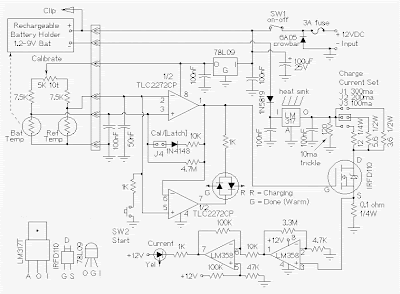
12V, 4-AA Cell Differential Temperature Charger Circuit diagram
The current is adjustable in three steps from 100 to 300mA, allowing fast charging of AA, AAA or other small cells. Battery packs from 1 to 6 cells can be charged with this circuit. NiMH and older NiCD cells are supported. The circuit is protected from reverse input voltage and reversed cells.
Connections:
12VDC power is supplied to the circuit from an external source such as a car battery system, a 12V solar power system or a regulated "wall wart" supply. If DC power is applied backwards, the 6A05 crowbar diode causes the 3A fuse to blow, protecting the circuit from reverse voltage. The power switch routes power to the 78L09 voltage regulator and the battery. The 78L09 regulator provides regulated power to the rest of the circuit.
The battery current loop starts with the +12V supply, then runs through the battery and through a 1N5819 reverse voltage protection diode. Current continues through the LM317 1 amp adjustable voltage regulator which is wired as a constant current source, through the IRFD110 power MOSFET transistor, which switches charging current on and off, through the 0.1 ohm current sensing resistor to ground (12VDC negative). The charge current is selected by jumpering one of three current-set resistors on the negative side of the LM317 regulator. The 120 ohm trickle charge resistor always allows 10mA of current to flow through the battery.
The temperature control part of the circuit starts with a matched pair of 10K NTC thermistors. One thermistor is epoxied to a small metal reference temperature plate. The other thermistor is epoxied to a metal battery holder. The temperature sensors are balanced by the calibrate potentiometer. The 100nF and 50nF capacitors across the thermistors cause different start-up time delays to insure that the following circuitry powers up in the off state.
The upper half of the TLC2272CP rail-to-rail op-amp is wired as a latching comparator when the Cal/Latch jumper is present (operate mode), the circuit becomes a regular comparator with hysteresis when the jumper is off (calibrate mode). Assuming the battery is cold and the circuit is in operate mode, the start switch turns the op-amp on for a charging cycle. When the battery temperature exceeds the reference temperature, the op-amp turns off and the diode in the feedback loop latches the op-amp off. The op-amp output also drives the IRFD110 current switch MOSFET.
The lower half of the TLC2272CP simply inverts the output from the upper part of the op-amp, this gives a bipolar drive signal for running the Red/Green Charging/Done light.
An optional current flow lamp was added to the circuit. Rechargeable batteries tend to get corroded contacts which can prevent the charging current from flowing. The lamp provides an indication that the charging current is really making its way through the batteries. The current Flow lamp circuit consists of an LM358 op-amp wired as a current measurement amplifier that monitors the voltage drop across a 0.1 ohm resistor. The LM358 is specially suited for this type of circuit. The output of the first LM358 stage is further boosted and offset by the second LM358 stage. This produces a digital signal that drives the indicator LED through a current limiting resistor. If you dont want to add the Current Flow circuit, replace the 0.1 ohm resistor with a wire jumper.
Construction:
The circuit was built on a custom home-built circuit board, a hand-wired perf board would also make a good platform for this project. The LM317 regulator is mounted on an aluminum heat sink under the main board, the heat sink should be kept away from the two temperature sensors. The reference temperature sensor is mounted to a small piece of aluminum that is thermally isolated from the battery holder and the rest of the circuitry. All of the sub-components are mounted on a piece of plexiglass or another non conducting material.
Calibration:
Put the circuit in one location and allow the temperature to stabilize for an hour or so. Remove the Cal/[Latch] jumper. Adjust the 20 turn Calibrate trimmer a little bit past the point where the Charge/Done light turns red. Put the Cal/[Latch] jumper back.
Use:
The charger should only be used in a cool location with a fairly constant temperature. Install the batteries to charge in the battery holder, start with the negative side of the socket and connect the alligator clip to the + side of the last cell. Put a piece of insulating foam over the battery holder to keep the warmth in the battery. If the battery is already hot, allow it to cool down before starting the charge cycle. The Charging/Done light should now be green.
Push the Start switch and the Charging/Done light should turn red. The Current Flow light should turn on, if it doesnt, try reseating the cells in the holder. After some amount of charging, the battery will warm up, the Charging/Done light will turn green and the battery charge cycle be finished. If you want to equalize the weaker cells in the battery, allow the pack to cool down then run another charging cycle, the second time should not take very long.
12V, 4-AA Cell Differential Temperature Charger Circuit diagram
The current is adjustable in three steps from 100 to 300mA, allowing fast charging of AA, AAA or other small cells. Battery packs from 1 to 6 cells can be charged with this circuit. NiMH and older NiCD cells are supported. The circuit is protected from reverse input voltage and reversed cells.
Connections:
- 12VDC (nominal) power input
- Connections for the Battery Under Charge
- Power On/Off switch
- Charge Start switch
- 3 step Charge Current Select jumper
- Calibrate/[Latch] mode jumper
- Temperature sensor calibrate trimmer
- Red/Green Charging/Done light
- Amber Current Flow light
12VDC power is supplied to the circuit from an external source such as a car battery system, a 12V solar power system or a regulated "wall wart" supply. If DC power is applied backwards, the 6A05 crowbar diode causes the 3A fuse to blow, protecting the circuit from reverse voltage. The power switch routes power to the 78L09 voltage regulator and the battery. The 78L09 regulator provides regulated power to the rest of the circuit.
The battery current loop starts with the +12V supply, then runs through the battery and through a 1N5819 reverse voltage protection diode. Current continues through the LM317 1 amp adjustable voltage regulator which is wired as a constant current source, through the IRFD110 power MOSFET transistor, which switches charging current on and off, through the 0.1 ohm current sensing resistor to ground (12VDC negative). The charge current is selected by jumpering one of three current-set resistors on the negative side of the LM317 regulator. The 120 ohm trickle charge resistor always allows 10mA of current to flow through the battery.
The temperature control part of the circuit starts with a matched pair of 10K NTC thermistors. One thermistor is epoxied to a small metal reference temperature plate. The other thermistor is epoxied to a metal battery holder. The temperature sensors are balanced by the calibrate potentiometer. The 100nF and 50nF capacitors across the thermistors cause different start-up time delays to insure that the following circuitry powers up in the off state.
The upper half of the TLC2272CP rail-to-rail op-amp is wired as a latching comparator when the Cal/Latch jumper is present (operate mode), the circuit becomes a regular comparator with hysteresis when the jumper is off (calibrate mode). Assuming the battery is cold and the circuit is in operate mode, the start switch turns the op-amp on for a charging cycle. When the battery temperature exceeds the reference temperature, the op-amp turns off and the diode in the feedback loop latches the op-amp off. The op-amp output also drives the IRFD110 current switch MOSFET.
The lower half of the TLC2272CP simply inverts the output from the upper part of the op-amp, this gives a bipolar drive signal for running the Red/Green Charging/Done light.
An optional current flow lamp was added to the circuit. Rechargeable batteries tend to get corroded contacts which can prevent the charging current from flowing. The lamp provides an indication that the charging current is really making its way through the batteries. The current Flow lamp circuit consists of an LM358 op-amp wired as a current measurement amplifier that monitors the voltage drop across a 0.1 ohm resistor. The LM358 is specially suited for this type of circuit. The output of the first LM358 stage is further boosted and offset by the second LM358 stage. This produces a digital signal that drives the indicator LED through a current limiting resistor. If you dont want to add the Current Flow circuit, replace the 0.1 ohm resistor with a wire jumper.
Construction:
The circuit was built on a custom home-built circuit board, a hand-wired perf board would also make a good platform for this project. The LM317 regulator is mounted on an aluminum heat sink under the main board, the heat sink should be kept away from the two temperature sensors. The reference temperature sensor is mounted to a small piece of aluminum that is thermally isolated from the battery holder and the rest of the circuitry. All of the sub-components are mounted on a piece of plexiglass or another non conducting material.
Calibration:
Put the circuit in one location and allow the temperature to stabilize for an hour or so. Remove the Cal/[Latch] jumper. Adjust the 20 turn Calibrate trimmer a little bit past the point where the Charge/Done light turns red. Put the Cal/[Latch] jumper back.
Use:
The charger should only be used in a cool location with a fairly constant temperature. Install the batteries to charge in the battery holder, start with the negative side of the socket and connect the alligator clip to the + side of the last cell. Put a piece of insulating foam over the battery holder to keep the warmth in the battery. If the battery is already hot, allow it to cool down before starting the charge cycle. The Charging/Done light should now be green.
Push the Start switch and the Charging/Done light should turn red. The Current Flow light should turn on, if it doesnt, try reseating the cells in the holder. After some amount of charging, the battery will warm up, the Charging/Done light will turn green and the battery charge cycle be finished. If you want to equalize the weaker cells in the battery, allow the pack to cool down then run another charging cycle, the second time should not take very long.
Monday, November 18, 2013
DC DC Converter 12V to 24V
This simple circuit is a DC-DC converter that converting up 12V source to a 24V. It can be used to run radios, small lights, relays, horns and other 24V accessories from a 12V vehicle with a maximum draw of about 800mA.
This DC-DC Converter can be used to charge one 12V battery from another, or step up the voltage just enough to provide necessary overhead for a 12V linear regulator. Using one op-amp as a squarewave oscillator to ring an inductor and another op-amp in a feedback loop, it wont drift around under varying loads, providing a stable 24V source for many applications. With a wide adjustment in output this circuit has many uses.
Parts List
R1-R4,R7-R8 100K 1/4W Resistor
R5 470 Ohm 1/2W Resistor
R6 10K Linear Pot
C1 0.01uF Mylar Capacitor
C2 0.1uF Ceramic Disc Capacitor
C3 470uF 63V Electrolytic Capacitor
D1 1N4004 Rectifier Diode
D2 BY229-400 Fast Recovery Diode See Notes
Q1 BC337 NPN Power Transistor
U1 LM358 Dual Op Amp IC
L1 See Notes
MISC Board, Wire, Socket For U1, Case, Knob For R6, Heatsink for Q1
DC- DC Converter Notes
1. R6 sets the output voltage. This can be calculated by Vout = 12 x (R8/(R8+R7)) x (R6B/R6A).
2. L1 is made by winding 60 turns of 0.63MM magnet wire on a toroidial core measuring 15MM (OD) by 8MM (ID) by 6MM (H).
3. D2 can be any fast recovery diode rated at greater then 100V at 5A. It is very important that the diode be fast recovery and not a standard rectifier. 4. Q1 will need a heatsink.
12V to 30V DC to DC Converter Schematic
12V to +/- 30V DC to DC Converter Circuit Diagram

This is a DC to DC converter for car power amplifier. 12V input generates +30V and -30V output for preamp or power amplifiers. Circuit uses SG3525 IC, Mosfets and switching power supply.
Friday, October 18, 2013
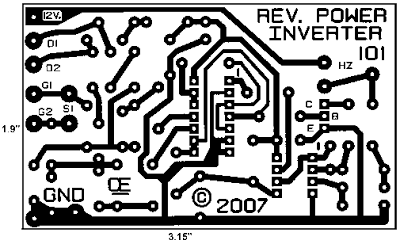
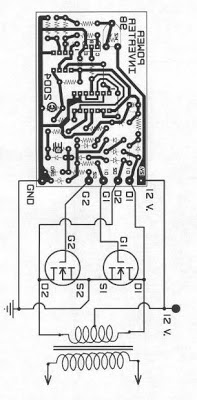
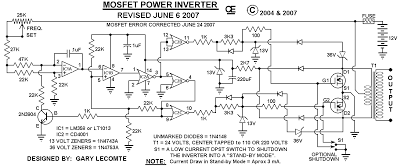
500W Mos Fet Power Inverter from 12V to 110V 220V
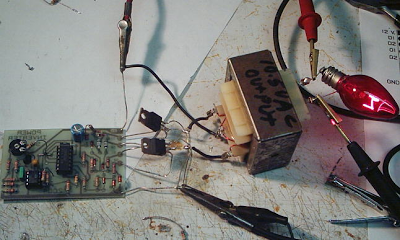
This circuit will provide a very stable "Square Wave" Output Voltage. Frequency of operation is determined by a pot and is normally set to 60 Hz. Various "off the shelf" transformers can be used. Or Custom wind your own FOR BEST RESULTS. Additional MosFets can be paralleled for higher power. It is recommended to Have a "Fuse" in the Power Line and to always have a "Load connected", while power is being applied. The Fuse should be rated at 32 volts and should be approximately 10 Amps per 100 watts of output. The Power leads must be heavy enough wire to handle this High Current Draw!
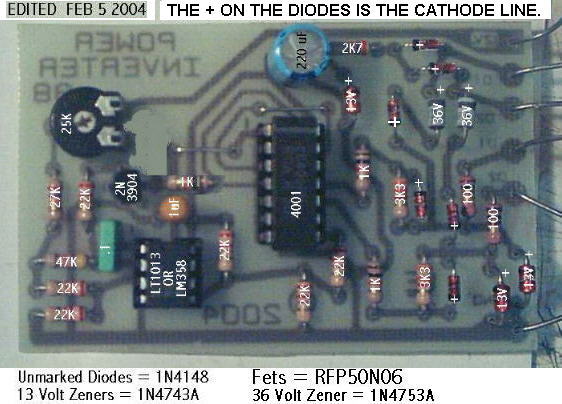
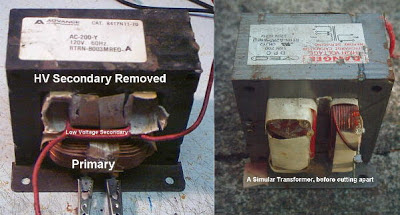
Appropriate Heat Sinks Should be used on the RFP50N06 Fets. These Fets are rated at 50 Amps and 60 Volts. ** Other types of Mosfets can be substituted if you wish. The LT1013 offers better drive that the LM358, but its your choice. The Power transformer must be capable of handling the chosen wattage output. Also, Appropriate Heat Sinks are Necessary on the Mos-Fets. Using a rebuilt Microwave transformer as shown below, it should handle about 500 watts Maximum. It requires about 18 turn Center-Tapped on the primary. To handle 500 watts would require using a 5 AWG wire. Pretty Heavy Stuff, but so is the current draw at that power.
Sunday, October 13, 2013
High Efficiency 12V White LED Driver
DC powered LED lighting circuits can vary from trivial single LED/series resistor combos to simple analog current regulators to more complicated switching power supply circuits such as this project. There is a tradeoff between simplicity and circuit capabilities. This more complex circuit adds features such as regulated light level across a wide range of input voltages and automatic circuit shutoff on low input voltage. By using a high frequency switching regulator, the power loss associated with the current dropping resistors found in simpler circuits is reduced. This offsets the power consumed by the circuits active parts. This circuit can power 10 white LEDs at 24mA of current with only 98mA of input supply current when running on 12V. LED intensity is fully regulated across the entire operating voltage range.
High Efficiency 12V White LED Driver Circuit Diagram
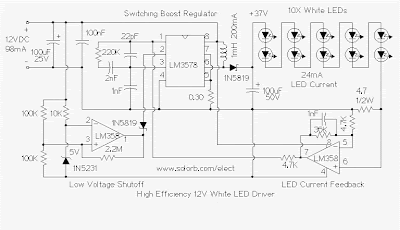
This circuit was inspired by F. Garcias IR LED video illumination circuit, published in the July 2001 edition of Nuts and Volts magazine. I modified the LED count and feedback circuit, and added the important low voltage shutdown feature.
Specifications:
The heart of the circuit is a string of 10 white LEDs. These are wired in series and connected to a current-regulated step-up switching power supply circuit.
The LM3578 switching regulator and its associated inductor, 1N5819 schottky diode, and 100uF 50V capacitor step the 12V power supply up to a higher DC voltage. The voltage is approximately 3.7 X the number of LEDs. The 4.7 ohm resistor on the cathode end of the LED string develops a voltage that is proportional to the current through the LEDs. This voltage is amplified by half of the LM358 op-amp and sends a negative feedback signal through a 4.7K resistor back to the LM3578. The 36K feedback resistor across the LM358 sets the LED series current to approximately 24mA. Not all general purpose op-amps will work in this circuit, the LM358 can operate from a single-rail power supply with both input pins near 0V.
The other half of the LM358 (pins 1,2,3) is wired as a 10V voltage comparator. The 1N5231 zener diode and 10K series resistor produces a steady 5V on pin 2 of the LM358. The two 100K resistors on pin 3 of the LM358 divide the input voltage in half. If the supply voltage drops below 10V, the output of the LM358 drops, and pulls pin 2 of the LM3578 down through a 1N5819 schottky diode, causing the LM3578 to shut down. A schottky diode is used instead of a standard silicon diode in order for the LM3578 pin 2 voltage to go low enough to disable the circuit. Without the low voltage shutdown circuit, the LM3578 current will increase as the supply voltage decreases until the IC self-destructs.
The 2.2M resistor across the LM358 produces a hysteresis effect for the low voltage shutoff. The circuit turns off about .25V below where it turns back on, this prevents oscillation around the shutoff threshold. Below the low voltage shutoff point, the circuit will consume about 5mA of current.
An interesting characteristic of this circuit is that it acts as a negative resistance at the power supply terminals. As the supply voltage is increased, the current will drop. The total power consumption stays nearly even across changing input voltage conditions.
Use:
Just connect the circuit to a 12V DC power supply, such as a solar charged lead acid battery. The light level will remain constant through the battery voltage change, and the circuit will consume a minimal amount of power.
It is possible to vary the number of white LEDs in this circuit from 8 to 12, as the LED count goes up, so does the regulators output voltage and input current. Numerous readers have asked me if this circuit can drive more than 12 3.7V white LEDs, 12 white LEDs is about the maximum upper power limit for the LM3578 IC. If you are driving lower voltage LEDs such as 1.4V IR or red parts, the series string can have up to 30 LEDs.
Parts:
1X LM3578AN switch-mode voltage regulator IC
1X LM358P dual op-amp
1X 1N5231 5V zener diode
2X 1N5819 schottky diodes
10X high intensity white LEDs
1X 100uF 25V electrolytic capacitor
1X 100uF 50V electrolytic capacitor
1X 100nF 50V ceramic or MLCC capacitors
1X 2nF 50V ceramic or MLCC capacitor
2X 1nF 50V ceramic or MLCC capacitors
1X 22pF ceramic disc capacitor
1X 0.3 ohm 1/4 W resistor (Substitutes: 3X 1 ohm or 2X 0.62 ohm 1/4W resistors in parallel)
1X 4.7 ohm 1/2W resistor
2X 4.7K 1/4W resistors
1X 10K 1/4W resistor
1X 36K 1/4W resistor
2X 100K 1/4W resistors
1X 220K 1/4W resistor
1X 2.2M 1/4W resistor
1X 1mH 200mA switching power supply inductor
Inductors that are known to work:
Mouser part 851-CDRH74NP-102MC (Sumida SMD)
Digi-Key part TKS3504CT-ND (Toko 875FU-102M=P3)
High Efficiency 12V White LED Driver Circuit Diagram
This circuit was inspired by F. Garcias IR LED video illumination circuit, published in the July 2001 edition of Nuts and Volts magazine. I modified the LED count and feedback circuit, and added the important low voltage shutdown feature.
Specifications:
- Power Requirements:
- Operating Voltage: 10-18V DC
- Operating Current: 98mA @ 12V DC (10 LEDs)
- Current at low voltage shutoff point: 5mA
The heart of the circuit is a string of 10 white LEDs. These are wired in series and connected to a current-regulated step-up switching power supply circuit.
The LM3578 switching regulator and its associated inductor, 1N5819 schottky diode, and 100uF 50V capacitor step the 12V power supply up to a higher DC voltage. The voltage is approximately 3.7 X the number of LEDs. The 4.7 ohm resistor on the cathode end of the LED string develops a voltage that is proportional to the current through the LEDs. This voltage is amplified by half of the LM358 op-amp and sends a negative feedback signal through a 4.7K resistor back to the LM3578. The 36K feedback resistor across the LM358 sets the LED series current to approximately 24mA. Not all general purpose op-amps will work in this circuit, the LM358 can operate from a single-rail power supply with both input pins near 0V.
The other half of the LM358 (pins 1,2,3) is wired as a 10V voltage comparator. The 1N5231 zener diode and 10K series resistor produces a steady 5V on pin 2 of the LM358. The two 100K resistors on pin 3 of the LM358 divide the input voltage in half. If the supply voltage drops below 10V, the output of the LM358 drops, and pulls pin 2 of the LM3578 down through a 1N5819 schottky diode, causing the LM3578 to shut down. A schottky diode is used instead of a standard silicon diode in order for the LM3578 pin 2 voltage to go low enough to disable the circuit. Without the low voltage shutdown circuit, the LM3578 current will increase as the supply voltage decreases until the IC self-destructs.
The 2.2M resistor across the LM358 produces a hysteresis effect for the low voltage shutoff. The circuit turns off about .25V below where it turns back on, this prevents oscillation around the shutoff threshold. Below the low voltage shutoff point, the circuit will consume about 5mA of current.
An interesting characteristic of this circuit is that it acts as a negative resistance at the power supply terminals. As the supply voltage is increased, the current will drop. The total power consumption stays nearly even across changing input voltage conditions.
Use:
Just connect the circuit to a 12V DC power supply, such as a solar charged lead acid battery. The light level will remain constant through the battery voltage change, and the circuit will consume a minimal amount of power.
It is possible to vary the number of white LEDs in this circuit from 8 to 12, as the LED count goes up, so does the regulators output voltage and input current. Numerous readers have asked me if this circuit can drive more than 12 3.7V white LEDs, 12 white LEDs is about the maximum upper power limit for the LM3578 IC. If you are driving lower voltage LEDs such as 1.4V IR or red parts, the series string can have up to 30 LEDs.
Parts:
1X LM3578AN switch-mode voltage regulator IC
1X LM358P dual op-amp
1X 1N5231 5V zener diode
2X 1N5819 schottky diodes
10X high intensity white LEDs
1X 100uF 25V electrolytic capacitor
1X 100uF 50V electrolytic capacitor
1X 100nF 50V ceramic or MLCC capacitors
1X 2nF 50V ceramic or MLCC capacitor
2X 1nF 50V ceramic or MLCC capacitors
1X 22pF ceramic disc capacitor
1X 0.3 ohm 1/4 W resistor (Substitutes: 3X 1 ohm or 2X 0.62 ohm 1/4W resistors in parallel)
1X 4.7 ohm 1/2W resistor
2X 4.7K 1/4W resistors
1X 10K 1/4W resistor
1X 36K 1/4W resistor
2X 100K 1/4W resistors
1X 220K 1/4W resistor
1X 2.2M 1/4W resistor
1X 1mH 200mA switching power supply inductor
Inductors that are known to work:
Mouser part 851-CDRH74NP-102MC (Sumida SMD)
Digi-Key part TKS3504CT-ND (Toko 875FU-102M=P3)
Wednesday, October 9, 2013
12V battery indicator level
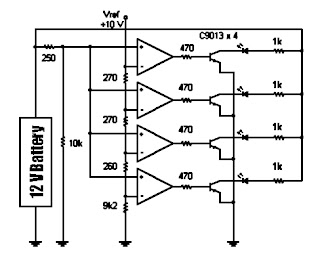
 The following sequence is useful to show the battery voltage (battery) 12 volts. Voltage level is shown with four lights led. To facilitate the reading of the led is arranged in a vertical array. Led top three chosen by the green LED while the lowest is selected the color red. If the battery voltage continues to decline (because of usage), the Led-Led will turn off sequentially from the top to the bottom.
Until if battery voltage is below 11.83 volts then only the red LED that lights up which means that the charge batteries are empty. Even this red Led will die if the stress continues to drop to below 11.5 volts. The working principle of this circuit is a comparison of battery voltage with a reference voltage.
Schematic Battery level indicator
Wednesday, October 2, 2013
12V to 220V Inverter Schematics
12V to 220V Inverter Circuit Diagrams, Even though today’s electrical appliances are increasingly often self-powered, especially the portable ones you carry around when camping or holidaying in summer, you do still sometimes need a source of 230 V AC - and while we’re about it, why not at a frequency close to that of the mains? As long as the power required from such a source remains relatively low - here we’ve chosen 30 VA - it’s very easy to build an inverter with simple, cheap components that many electronics hobbyists may even already have 12V to 220V Inverter.
 |
| 12V to 220V Inverter Circuit Diagrams |
Though it is possible to build a more powerful circuit, the complexity caused by the very heavy currents to be handled on the low-voltage side leads to circuits that would be out of place in this summer issue. Let’s not forget, for example, that just to get a meager 1 amp at 230 VAC, the battery primary side would have to handle more than 20 ADC!. The circuit diagram of 12V to 220V Inverter Schematics our project is easy to follow. A classic 555 timer chip, identified as IC1, is configured as an astable multivibrator at a frequency close to 100 Hz, which can be adjusted accurately by means of potentiometer P1.
As the mark/space ratio (duty factor) of the 555 output is a long way from being 1:1 (50%), it is used to drive a D-type flip-flop produced using a CMOS type 4013 IC. This produces perfect complementary square-wave signals (i.e. in antiphase) on its Q and Q outputs suitable for driving the output power transistors. As the output 12V to 220V Inverter current available from the CMOS 4013 is very small, Darlington power transistors are used to arrive at the necessary output current. We have chosen MJ3001s from the now defunct Motorola (only as a semi-conductor manufacturer, of course!) which are cheap and readily available, but any equivalent power Darlington could be used.
These drive a 230 V to 2 × 9 V center-tapped transformer used ‘backwards’ to produce the 230 V output. The presence of the 230 VAC voltage is indicated by a neon light, while a VDR (voltage dependent resistor) type S10K250 or S07K250 clips off the spikes and surges that may appear at the transistor switching points. The output signal this circuit produces is approximately a square wave; only approximately, since it is somewhat distorted by passing through the transformer. Fortunately, it is suitable for the majority of electrical devices it is capable of supplying, whether they be light bulbs, small motors, or power supplies for electronic devices.
PCB layout:
These drive a 230 V to 2 × 9 V center-tapped transformer used ‘backwards’ to produce the 230 V output. The presence of the 230 VAC voltage is indicated by a neon light, while a VDR (voltage dependent resistor) type S10K250 or S07K250 clips off the spikes and surges that may appear at the transistor switching points. The output signal this circuit produces is approximately a square wave; only approximately, since it is somewhat distorted by passing through the transformer. Fortunately, it is suitable for the majority of electrical devices it is capable of supplying, whether they be light bulbs, small motors, or power supplies for electronic devices.
PCB layout:

COMPONENTS LIST
Resistors
R1 = 18k?
R2 = 3k3
R3 = 1k
R4,R5 = 1k?5
R6 = VDR S10K250 (or S07K250)
P1 = 100 k potentiometer
Capacitors
C1 = 330nF
C2 = 1000 µF 25V
Semiconductor
T1,T2 = MJ3001
IC1 = 555
IC2 = 4013
Miscellaneous
LA1 = neon light 230 V
F1 = fuse, 5A
TR1 = mains transformer, 2x9V 40VA (see text)
4 solder pins
Note that, even though the circuit is intended and designed for powering by a car battery, i.e. from 12 V, the transformer is specified with a 9 V primary. But at full power you need to allow for a voltage drop of around 3 V between the collector and emitter of the power transistors. This relatively high saturation voltage is in fact a ‘shortcoming’ common to all devices in Darlington configuration, which actually consists of two transistors in one case. We’re suggesting a PCB design to make it easy to construct this project; as the component overlay shows, the PCB only carries the low-power, low-voltage components.
The Darlington transistors should be fitted onto a finned anodized aluminum heat-sink using the standard insulating accessories of mica washers and shouldered washers, as their collectors are connected to the metal cans and would otherwise be short-circuited. An output power of 30 VA implies a current consumption of the order of 3 A from the 12 V battery at the ‘primary side’. So the wires connecting the collectors of the MJ3001s [1] T1 and T2 to the transformer primary, the emitters of T1 and T2 to the battery negative terminal, and the battery positive terminal to the transformer primary will need to have a minimum cross-sectional area of 2 mm2 so as to minimize voltage drop.
The transformer can be any 230 V to 2 × 9 V type, with an E/I iron core or toroidal, rated at around 40 VA. Properly constructed on the board shown here, the circuit should work at once, the only adjustment being to set the output to a frequency of 50 Hz with P1. You should keep in minds that the frequency stability of the 555 is fairly poor by today’s standards, so you shouldn’t rely on it to drive your radio-alarm correctly – but is such a device very useful or indeed desirable to have on holiday anyway? Watch out too for the fact that the output voltage of this inverter is just as dangerous as the mains from your domestic power sockets.
So you need to apply just the same safety rules! Also, the project should be enclosed in a sturdy ABS or diecast so no parts can be touched while in operation. The circuit should not be too difficult to adapt to other mains voltages or frequencies, for example 110 V, 115 V or 127 V, 60 Hz. The AC voltage requires a transformer with a different primary voltage (which here becomes the secondary), and the frequency, some adjusting of P1 and possibly minor changes to the values of timing components R1 and C1 on the 555.
Resistors
R1 = 18k?
R2 = 3k3
R3 = 1k
R4,R5 = 1k?5
R6 = VDR S10K250 (or S07K250)
P1 = 100 k potentiometer
Capacitors
C1 = 330nF
C2 = 1000 µF 25V
Semiconductor
T1,T2 = MJ3001
IC1 = 555
IC2 = 4013
Miscellaneous
LA1 = neon light 230 V
F1 = fuse, 5A
TR1 = mains transformer, 2x9V 40VA (see text)
4 solder pins
Note that, even though the circuit is intended and designed for powering by a car battery, i.e. from 12 V, the transformer is specified with a 9 V primary. But at full power you need to allow for a voltage drop of around 3 V between the collector and emitter of the power transistors. This relatively high saturation voltage is in fact a ‘shortcoming’ common to all devices in Darlington configuration, which actually consists of two transistors in one case. We’re suggesting a PCB design to make it easy to construct this project; as the component overlay shows, the PCB only carries the low-power, low-voltage components.
The Darlington transistors should be fitted onto a finned anodized aluminum heat-sink using the standard insulating accessories of mica washers and shouldered washers, as their collectors are connected to the metal cans and would otherwise be short-circuited. An output power of 30 VA implies a current consumption of the order of 3 A from the 12 V battery at the ‘primary side’. So the wires connecting the collectors of the MJ3001s [1] T1 and T2 to the transformer primary, the emitters of T1 and T2 to the battery negative terminal, and the battery positive terminal to the transformer primary will need to have a minimum cross-sectional area of 2 mm2 so as to minimize voltage drop.
The transformer can be any 230 V to 2 × 9 V type, with an E/I iron core or toroidal, rated at around 40 VA. Properly constructed on the board shown here, the circuit should work at once, the only adjustment being to set the output to a frequency of 50 Hz with P1. You should keep in minds that the frequency stability of the 555 is fairly poor by today’s standards, so you shouldn’t rely on it to drive your radio-alarm correctly – but is such a device very useful or indeed desirable to have on holiday anyway? Watch out too for the fact that the output voltage of this inverter is just as dangerous as the mains from your domestic power sockets.
So you need to apply just the same safety rules! Also, the project should be enclosed in a sturdy ABS or diecast so no parts can be touched while in operation. The circuit should not be too difficult to adapt to other mains voltages or frequencies, for example 110 V, 115 V or 127 V, 60 Hz. The AC voltage requires a transformer with a different primary voltage (which here becomes the secondary), and the frequency, some adjusting of P1 and possibly minor changes to the values of timing components R1 and C1 on the 555.
B. Broussas
Source : Link
Another interesting related Circuit : DC 12V to 24V Contverter, 5000W PWM inverter, and other Inverter / Converter Circuit.
Another interesting related Circuit : DC 12V to 24V Contverter, 5000W PWM inverter, and other Inverter / Converter Circuit.
Thursday, September 26, 2013
Universal battery charger with 12V source voltage

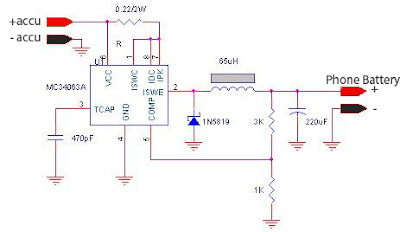
In this post I will share about using Accu source to charge batteries that can be used on any mobile brand, or can be called universal phone battery charger. Because the battery charger using a source of 12V, the charge accumulator can also be used in cars and others.
This will out charger circuit voltage of 5 volts DC, with input from at least 6 volt battery, and voltage inputs that have been tried till with 15 volts (more than it has not been tried, because the battery that tie the maximum output voltage is only 13.8 volts).
Subscribe to:
Posts (Atom)